
Trusted Hair Transplant Clinic: Criteria You Must Check Before Deciding
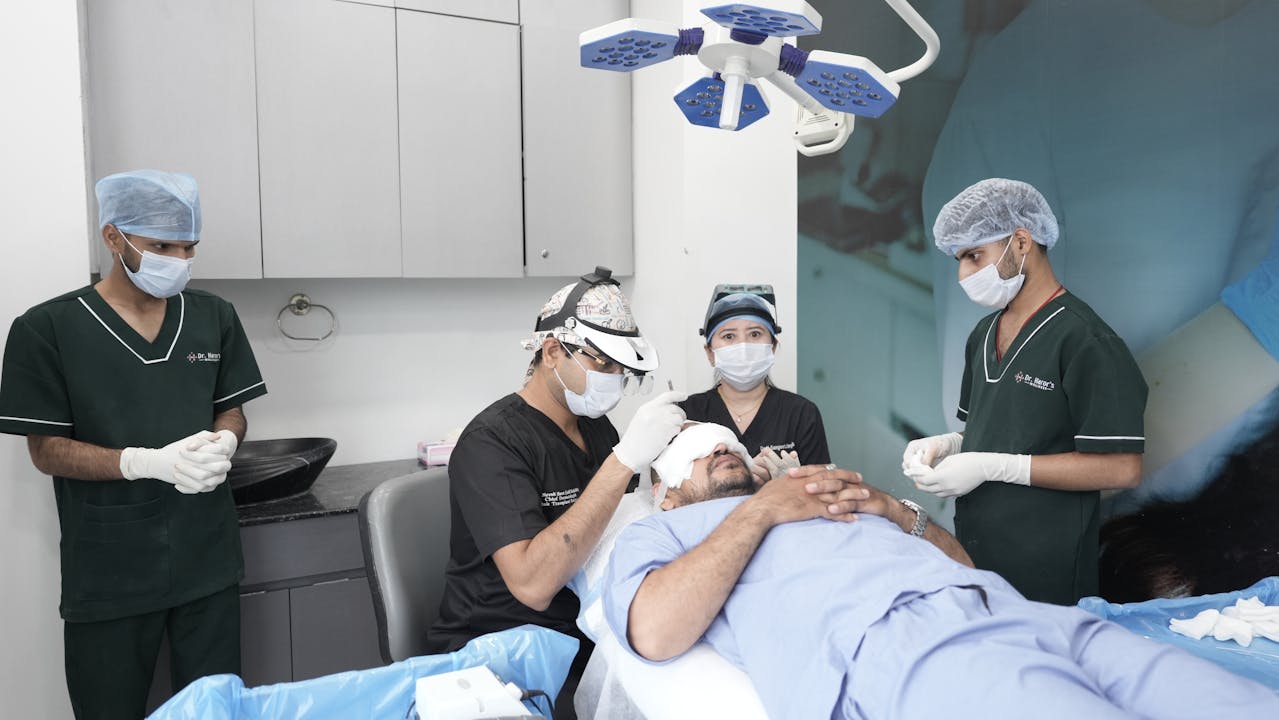
Choosing a hair transplant clinic is a decision whose results will be visible on your head for the rest of your life. That is not hyperbole. Successfully transplanted hair grows permanently, and the placement, which determines whether the result looks natural, cannot easily be redone.
This is where many men make their most costly mistake: deciding too quickly based on price or a website’s appearance, without sufficiently verifying the factors that actually determine procedural quality and patient safety.
This article covers the most important criteria to check before choosing a clinic, including signs that prospective patients often overlook but that have the greatest impact on both the experience and the outcome.
To experience firsthand what a good consultation standard should feel like, visit themensclinic.co.id.
First Criterion: Who Actually Performs the Procedure
This is a question that sounds straightforward but whose answer is often surprising. At many clinics, especially those with very high patient volumes, the doctor is only present for certain parts of the procedure, typically the hairline design at the start, while the extraction and placement of grafts is carried out by trained technicians who are not physicians.
Is this always problematic? Not automatically, because a highly trained and experienced technician can possess strong technical skills. But there is a significant difference between a procedure that is entirely performed and directly supervised by a specialist doctor, and one where the doctor is only present at the beginning and then leaves the team to continue on their own.
When an unusual situation arises mid-procedure, whether an unexpected scalp condition, a non-standard patient response, or a technical decision requiring medical judgment, a doctor who is present in the room is the one who can make that call correctly.
How to verify: ask directly and explicitly. Not just ‘who will be handling me?’ but ‘who will perform the graft extraction and who will carry out the placement, and will the specialist doctor be present in the room throughout the entire procedure?’ With over 15 years of doctor experience, thousands of satisfied customer from triple A and public figure in Indonesia
Second Criterion: Specific Qualifications in Hair Transplantation
Not every doctor who calls themselves a ‘hair specialist’ holds equivalent qualifications. The most relevant speciality backgrounds for hair transplantation are dermatology and plastic surgery, as both include deep knowledge of skin, follicles, and minimally invasive skin procedures.
But even more important than a speciality degree is specific experience with hair transplantation. A doctor with hundreds or thousands of successful hair transplant procedures possesses skills that cannot be acquired through academic training alone. The artistic ability to design a natural-looking hairline, the technical precision to harvest grafts with a low transection rate, and the understanding of how hair grows in different areas of the scalp all develop through extensive hands-on experience. With over 15 years of doctor experience, thousands of satisfied customer from triple A and public figure in Indonesia
How to Verify Experience
Ask directly: how many hair transplant procedures have been performed, is there any specific certification or training in hair transplantation from a verifiable institution, and are there before-and-after photos from previous patients available to review, ideally from patients with conditions similar to yours.
Before-and-after photos shown by the clinic can be a useful indicator, but they need to be viewed critically. Photos where lighting conditions differ significantly between before and after, or where the angle of the shots varies considerably, are difficult to use as an accurate benchmark of actual result quality.
Third Criterion: The Evaluation Process Before Any Recommendation
A clinic that prioritises the patient’s interests will never recommend a procedure or quote a price before thoroughly evaluating the condition of the hair and scalp. An adequate evaluation takes time and includes components that cannot be replaced by an online consultation.
What Should Be Included in the Evaluation
Assessment of baldness progression using a medically recognised standard scale. Analysis of the donor area to assess follicle density, hair characteristics, and an estimate of how many grafts can safely be harvested. A discussion of the patient’s expectations and whether those expectations are realistic given the existing conditions. Assessment of the overall scalp condition to identify anything that may need to be addressed before or alongside the procedure.
If, within the first 15 minutes of a consultation, you are already being directed toward package options and pricing without any meaningful evaluation having taken place, that is a very clear signal about that clinic’s priorities.
Signs of a Good Evaluation
A doctor who asks many questions about your family history of baldness, general health, current medications, and lifestyle before offering any recommendations. A doctor who is honest about existing limitations, for example, a donor area that is not dense enough to achieve the desired outcome, or expectations that need to be adjusted. A doctor who explains the available options, including the advantages and limitations of each, rather than simply promoting one approach.
If you want to experience firsthand what a consultation that meets all the criteria above actually feels like, The Men’s Clinic offers a free first consultation with no commitment. Visit us at SCBD and Menteng, Jakarta.
Fourth Criterion: Facility and Sterility Standards
A hair transplant involves small open wounds on the scalp. Inadequate sterility standards can lead to infections that disrupt the healing process and affect graft survival. In more serious cases, they can cause permanent damage to the operated area.
Standards that must be in place: a procedure room that meets sterility requirements for minimally invasive procedures, properly sterilised instruments between patients, a clear protocol for handling grafts from extraction to placement to maintain their viability, and a medical team that follows standard hygiene procedures.
How to assess this from a patient’s perspective: the general cleanliness of the facility, whether instruments appear to have been newly opened from sterile packaging or were already opened, and whether the medical team is using appropriate gloves and masks. This is not about paranoia; it is about the minimum standards that should be present in every medical procedure.
Fifth Criterion: Transparency About Expectations and Limitations
A good doctor will always communicate realistic expectations, even when that means delivering information the patient may not want to hear. This is a mark of professional integrity that is critically important in cosmetic procedures where patient expectations are often very high.
What a Good Doctor Should Communicate
What percentage of transplanted grafts can realistically be expected to successfully grow, based on the clinic’s own outcomes? A realistic timeline before the final result is visible, including an explanation of the shock loss phase that frequently surprises patients. Whether there are limitations from the donor condition that may constrain what can be achieved. Whether additional sessions may be needed in the future to reach the desired outcome, and if so, what the estimated cost would be.
A clinic that only presents the positives without honestly discussing limitations, risks, and realistic expectations places sales above medical honesty.
Sixth Criterion: Commitment to Post-Procedure Follow-Up
A hair transplant procedure does not end when the patient leaves the clinic on the day of the procedure. Monitoring during the following months is an integral part of comprehensive care, and a clinic that is serious about long-term outcomes will have a clear follow-up structure in place.
What follow-up should look like: an evaluation visit one month post-procedure to assess the initial healing process, an evaluation at the six-month mark to assess growth progress, and accessible channels for reaching the doctor if questions or concerns arise between scheduled visits.
Ask clearly before you begin: are follow-up visits included in the package fee, how many visits are scheduled, and how can you reach the medical team if you have an urgent question during recovery.
Warning Signs That Are Frequently Overlooked
Beyond the positive criteria to look for, certain patterns of behaviour frequently appear at clinics that do not put patient interests first.
Pressure to Decide Quickly
‘This promotion is only valid today’, ‘slots this week are almost full’, ‘prices go up next month’. Urgency tactics that push for a quick decision are not a feature of good medical practice. A decision about a procedure with permanent results requires time for consideration, and a good clinic will respect that.
Promises That Are Too Good to Be True
Guaranteed specific outcomes, claims of 100 per cent success rates, or promises that there will be no shock loss phase are claims with no medical basis, and that should trigger scepticism. No medical procedure can offer such guarantees, and a clinic that makes them is prioritising sales over medical honesty.
No Discussion of Risks
Every medical procedure carries risks. A clinic that does not discuss risks at all, or that dismisses them excessively, is not providing genuine informed consent. Patients have the right to understand the risks involved before deciding to proceed.
Packages with Unrealistic Graft Counts
Claims of 5,000 or 6,000 grafts in a single session at a very low price need to be evaluated very critically. Extremely large graft numbers in a single session increase the risk of graft damage during the process and the risk of excessive donor area depletion. A competent doctor will recommend a graft count that matches the available donor capacity, not a number that sounds large to create the impression of better value.
How to Begin Evaluating a Clinic
An effective clinic evaluation process can begin even before coming in for a first consultation.
- Research the doctor who will be handling you: their name, speciality, and if possible, a verifiable track record from independent sources.
- Check whether the clinic is registered with official health authorities and whether there are any publicly accessible complaint records.
- Contact the clinic and observe how your initial questions are handled: are you immediately directed toward prices and packages, or does someone first ask about your specific condition and needs?
- If possible, seek direct references from people who have undergone a procedure at that clinic, not just testimonials displayed on the clinic’s own website.
- Plan to consult at more than one clinic before deciding. Comparing consultation experiences in person provides a far more accurate picture than comparing figures on websites.
At The Men’s Clinic, every criterion for a trustworthy clinic discussed in this article is not just a standard we acknowledge, but one we practice in every interaction with our patients. Free consultation at SCBD or Menteng, Jakarta. with over 15 years of doctor experience, thousands of satisfied customer from triple A and public figure in Indonesia
FAQ
How many clinics should ideally be consulted before deciding?
A minimum of two, ideally three. Consulting at more than one clinic provides a much stronger basis for comparison than a single visit. If the recommendations from two different clinics are significantly contradictory, a third consultation can help establish a clearer picture. A good clinic will not be offended to learn that you are comparing several options.
Is an online consultation sufficient to assess the quality of a clinic?
An online consultation can be a useful starting point for a first impression, but it cannot replace an in-person consultation for a procedure with permanent consequences. An accurate evaluation of hair and scalp condition can only be done directly, and assessing the quality of communication and your level of trust in the doctor is also far more effective face-to-face.
Is a clinic that has been established for a long time always more trustworthy?
The age of a clinic is one indicator, but not the only one. A long-established clinic has a more extensive track record that can be evaluated, which can be an advantage. But a newer clinic with a highly experienced doctor and high standards can deliver equally good results. Focus on the qualifications and track record of the doctor, not just the age of the clinic.
What if a clinic refuses to show before-and-after photos from previous patients?
This is a significant warning sign. A clinic confident in the quality of its results will readily show photos from patients who have permitted their images to be used as references. A refusal to show relevant before-and-after photos, without a clear explanation, is worth questioning seriously.
Is it necessary to get a recommendation from a general practitioner or another specialist before choosing a hair transplant clinic?
It is not mandatory, but it can be useful. A general practitioner who knows your overall health condition can provide guidance on whether there are any medical considerations to address before undergoing the procedure. And if you have an existing relationship with a dermatologist or plastic surgeon, a referral from them to a trusted hair transplant clinic can be a very valuable starting point.
📖 Artikel Terkait
- Botak Total, Masih Bisa Tanam Rambut? Ini Faktanya
- Harga Transplantasi Rambut Pria di Jakarta – Panduan Lengkap 2026
- Shock Loss Setelah Hair Transplant: Normal atau Tanda Masalah?
- The Men's Clinic: Solusi Tepat untuk kebotakan pada pria
- Mengapa Kebotakan Terjadi pada Pria Muda?
- Hair Transplant Treatment: Pre and Post-Procedure Care That Determines Your Results